

A Season for Thoughtful Moves
September gave Denver Metro buyers more homes to choose from and more time to consider them. Inventory grew, homes generally took longer to sell than they did in August, and fewer purchases moved forward. Prices also eased month over month, although the year-over-year picture remained more stable for detached homes than for condos and townhomes. As we settle into fall, the story is one of a market requiring more patience and careful decisions on both sides of the transaction.
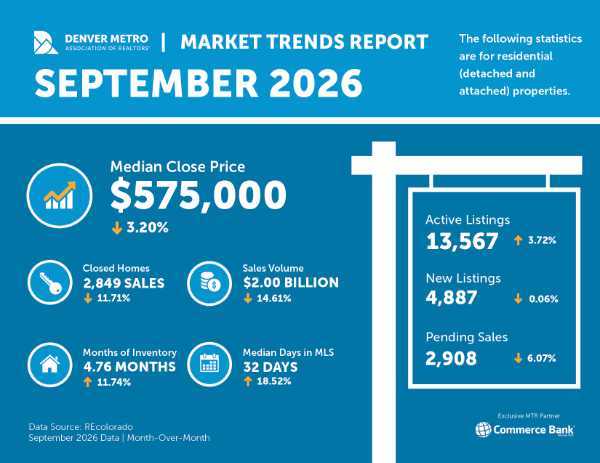 September ended with 13,567 active listings, up 3.72% from August and the highest September inventory level since 2011. That increase wasn’t driven by a rush of new sellers: new listings were essentially unchanged from the previous month and slightly below last September. Instead, available homes accumulated as sales slowed. The difference was especially noticeable among attached homes, where inventory was nearly 10% higher than a year ago, compared with just over 1% growth for detached homes. Buyers have more selection, and sellers have more competition for their attention.
That growing selection came with a longer shopping window. Homes spent an average of 52 days in MLS, with a median of 32 days—both higher than in August. Detached homes still moved more quickly, with a 49-day average and a 28-day median, although both measures increased nearly 17% during the month. Attached homes averaged 64 days, while their median held at 44. The year-over-year comparison was less dramatic: average market time rose slightly overall, while the median was lower. September felt slower than August, without every measure pointing to a slower pace than last fall.
Fewer buyers signed contracts or reached the closing table. Pending sales declined about 6% from August across both property types and were approximately 13% below last September. Closings saw a larger pullback, falling nearly 12% month over month and just over 21% year over year, with similar declines for detached and attached homes. Together, those figures help explain why inventory increased despite little change in new listings. Homes continued coming to market, while fewer were moving through the purchase process.
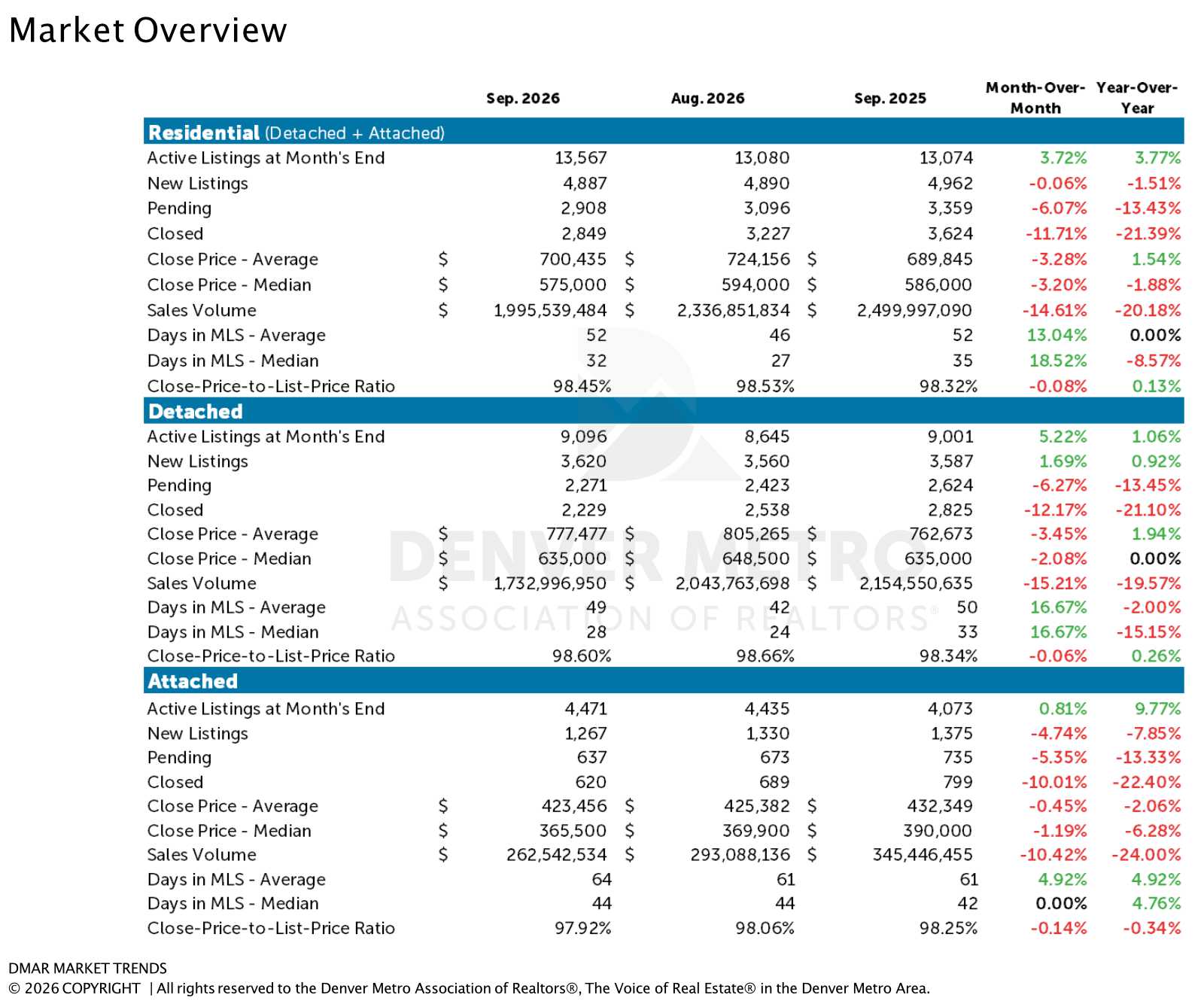
Prices eased alongside that slower activity. The overall average close price declined 3.28% from August to $700,435, while the median fell 3.20% to $575,000. Detached homes saw larger monthly adjustments than attached homes, whose average and median prices each slipped roughly 1% or less. Looking back a year tells a different story: detached prices remained relatively steady, with the average nearly 2% higher and the median unchanged. Attached prices were lower at both measures, including a 6.28% decline at the median. Those differences matter when setting expectations, whether you’re preparing to sell a detached home or shopping for a condo.
For Sellers
This is a market where every part of the first impression matters. Buyers can compare more homes, take their time, and look closely at condition and value. Accurate pricing, thoughtful preparation, and photos that clearly communicate the home’s strengths need to work together. Help buyers picture daily life there: show how a spare room can serve multiple purposes, highlight manageable outdoor spaces, and make each room feel inviting and useful. A longer selling timeline also calls for regular reviews of feedback and competing listings, so adjustments are thoughtful and timely.
For Buyers
Fall can offer breathing room as some households pause their searches until the New Year. That may mean less competition, although selection typically narrows as sellers withdraw homes for the holidays. If moving fits your life and budget, there is value in staying engaged. Seller-paid concessions and rate buydowns may help structure a workable purchase, depending on the property and loan. Have your lender compare the full costs and any future payment changes so your decision rests on a payment you can comfortably manage.
Navigating Today’s Shifting Housing Trends
September’s numbers also set the stage for what comes next. Mortgage rates climbed through the month, reaching approximately 7.5% by its end, and the Federal Reserve raised its benchmark rate mid month. Most September closings began with contracts signed before those changes, so next month’s report should give us a clearer view of how buyers responded. We’ll also watch whether uncertainty ahead of the November midterms influences consumer confidence and decisions to buy or list, alongside the usual seasonal slowdown. The effects of the election itself will take longer to assess. As those pieces unfold, we can help you connect the broader trends to your own timeline, financing, and goals — because the right next step still starts with what makes sense for your life.
(Info Source: D.M.A.R. (The Denver Metro Association of Realtors, YCRE Analysis)
*We use reasonable efforts to include accurate and up-to-date information. The real estate market changes often. We make no guarantees of future real estate performance and assume no liability for any errors of omission in the content.